

Google proposes Nebraska data center requiring more power than all of Lincoln
Documents show the tech giant could build a massive new data center powered by a privately built and owned gas-fueled power plant
 By News Channel Nebraska
Google announced plans to build a new data center on a roughly 260-acre site near Blair High Road and State Street in northwest Omaha in 2022. The data center started operating in 2024 even as construction on the site continued. Photo by Naomi Delkamiller/Flatwater Free Press
By Anila Yoganathan
Flatwater Free Press
This story is made possible through a partnership between Flatwater Free Press and Grist, a nonprofit environmental media organization.
Google is considering building a data center in Nebraska that could require more than three times the amount of power the entire city of Lincoln uses at peak demand in the summer.
The tech giant would power that massive data center — possibly the largest in state history — through a privately built utility-scale natural gas plant potentially capable of producing more power than the largest power plant in the state. And it would use carbon capture technology to reduce greenhouse gas emissions.
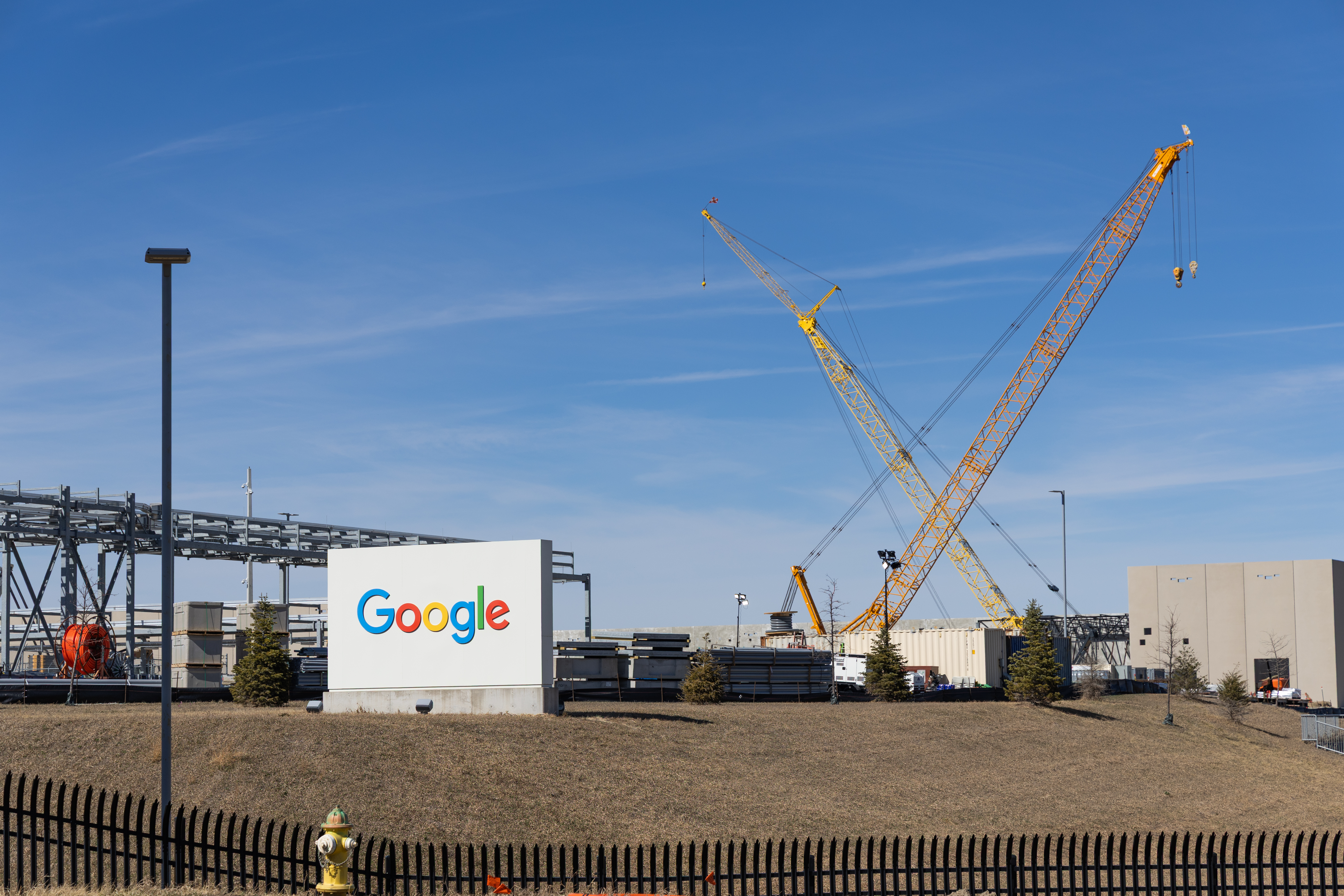
Google has three data centers in Nebraska, including this one in Papillion. The company has privately proposed a fourth in the state. Unlike the others, it would rely on a privately built and owned power plant. But in order for the plant to connect to the local power grid, state lawmakers must pass a bill proposed by the Governor’s Office. Photo by Naomi Delkamiller/Flatwater Free Press
The proposal was outlined in documents shared at a private meeting of a Nebraska public power district in January. The Flatwater Free Press obtained the documents under an agreement that it would not identify the source. The plans have not been disclosed publicly to date.
As outlined in the documents, the proposed project names three companies: Google, private energy developer, manager and operator Tenaska and natural gas and carbon dioxide pipeline company Tallgrass Energy. Tenaska, an Omaha-based company, would be responsible for powering the new data center, while Tallgrass potentially would supply both the natural gas and transport the captured carbon, according to the documents.
The documents state the proposed project could be online as soon as 2029, though it’s unclear how close this proposal is to becoming a reality. Neither Google nor Tenaska responded to multiple inquiries and requests for comment. Tallgrass, in a statement to Flatwater, denied being involved in the project.
The Omaha Public Power District, Nebraska Public Power District and Lincoln Electric System said in statements they do not discuss potential customers until they’re announced publicly, noting those proposals can involve nondisclosure agreements.
The proposal could hinge on passage of a bill in the Nebraska Legislature. The legislation, which was proposed by the Governor’s Office, would allow for the creation of privately built and owned power facilities to power a large industrial customer. Those private power plants could then hook up to their local power district’s grid and potentially sell excess power back to the grid under agreements with the local utilities.
The state’s public power districts have endorsed the measure, with OPPD saying it is aware of a potential project that could be impacted by the bill — though the power district reiterated it doesn’t comment on specific projects.
Tenaska has publicly supported the bill. The company also has been optioning hundreds of acres of land across southeast Nebraska since late last year, according to public records obtained by Flatwater. The company also upped its contributions to Gov. Jim Pillen’s reelection campaign last year.
Kenny Zoeller, director of policy research for Pillen’s office, acknowledged that the companies tied to the proposed project have been part of discussion that ultimately led to the legislation. But they are far from the only ones, he said. The Governor’s Office also consulted with the state’s public power districts, he said.
The bill was not drafted for any single industry or project, Zoeller said, adding that the goal is to make Nebraska economically competitive while ensuring ratepayers don’t have to pay for a large user’s power needs.
“There have been multiple companies that have indicated to the Governor and his office that legislation like this would make Nebraska a competitive place for investment,” Zoeller said in a statement. “However, no investment has ever predicated on the passage of LB1261.”
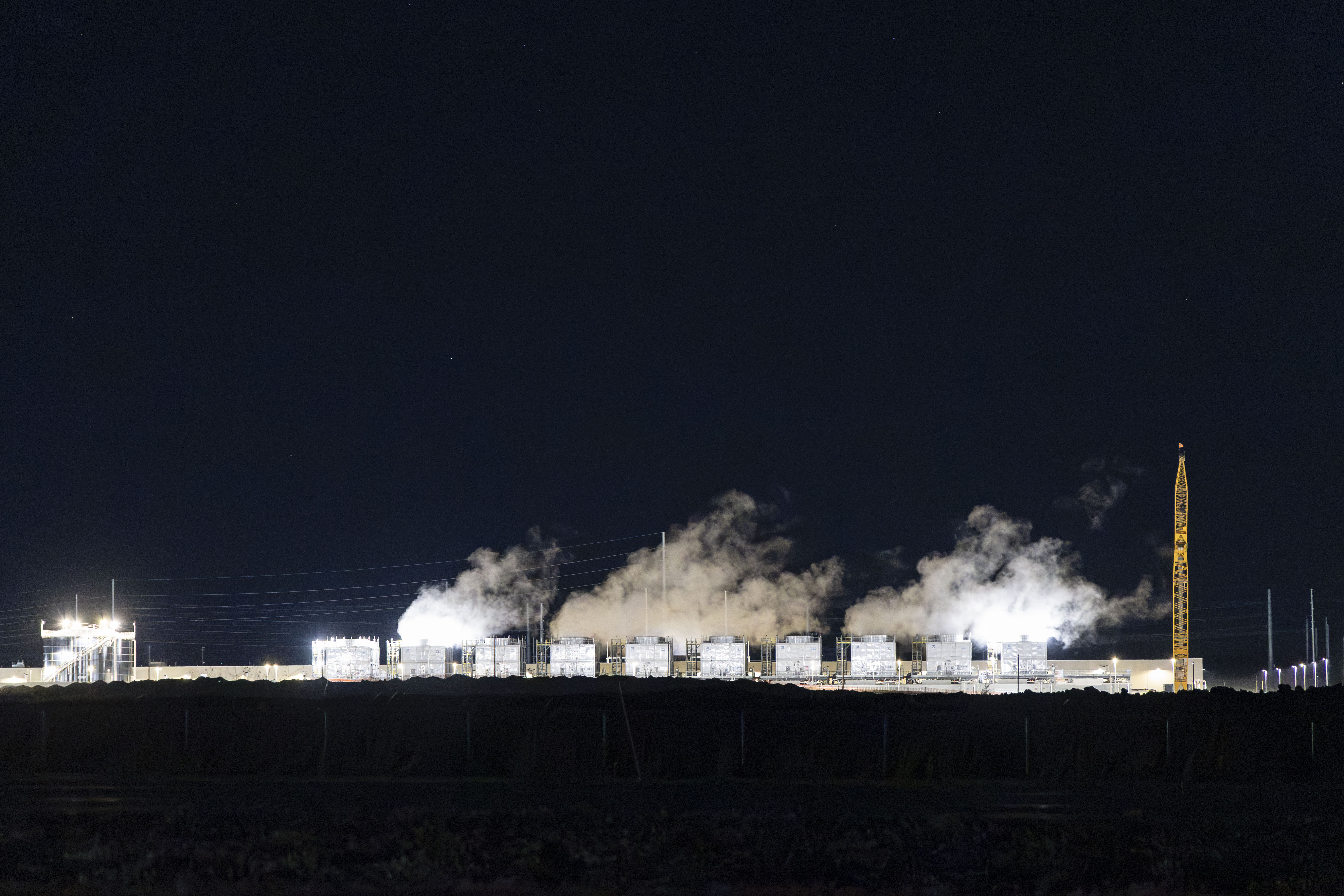
A Google data center outside of Lincoln near Interstate 80 and North 56th Street on March 11. The company officially announced the long-rumored project — known for years simply as Agate — in 2023, making it the tech giant’s third in Nebraska. Photo by Naomi Delkamiller/Flatwater Free Press
Proposal could be first of its kind
Google already has three data center locations in Nebraska: In Papillon, Omaha and Lincoln. From 2021 to 2023, the company has supported about 13,300 annual jobs, and since 2019 has invested over $3.5 billion in the state’s digital infrastructure, according to a 2024 state impact study.
Google’s parent company, Alphabet, plans to continue ramping up its data center investments in 2026, spending up to $185 billion on what it calls technical infrastructure, according to the company’s earnings call in February.
The scope of the company’s proposal, as outlined in the documents obtained by Flatwater, is massive. The data center itself, which could require 1,000 to 3,000 megawatts of power, would be one of the largest nationally if built, according to Kenneth Gillingham, a professor of environmental and energy economics at Yale University.
The amount of power would be significantly more than the 800 megawatts needed across Lincoln Electric System’s service area in the summer, when energy demand is at its highest.
The natural gas plant powering the data center could potentially produce more than twice the 1,365 megawatts produced by Nebraska Public Power District’s Gerald Gentleman Station, the largest power plant in the state.
And if the project does incorporate carbon capture and storage, it could be the largest operation of its kind in the country, Gillingham said.
“In the U.S., there's nothing that large with CCS,” he said, using the acronym for carbon capture and storage.
Data centers have encountered growing resistance in communities across the U.S. Lawmakers in at least a dozen states have introduced legislation that would place a moratorium on new data center construction, according to Good Jobs First, a Washington-based policy center that advocates for corporate and government accountability in economic development.
While data centers can bring in tax revenue and provide construction jobs, they do not provide many permanent jobs, and they can require large amounts of land, water and power.
Utilities across the country are scrambling to meet exponential growth in electricity demand from data centers and other customers.
Amid that backdrop, there is a growing push nationally to allow data centers to build their own power supply. President Donald Trump promoted the idea during a recent meeting with tech executives as a way to combat rising power rates and stress on the grid.
Pillen appears to want to do the same thing in Nebraska. In his January State of the State address, the governor said his bill would position Nebraska to “win the electricity and AI power game” by allowing those companies to effectively make their own power.
Under current Nebraska law, public power utilities have the authority to condemn certain kinds of generation and take it via eminent domain, but there are exceptions. Private power generation from renewable sources like wind and solar are allowed and can hook up to the grid. Nonrenewable private power generation is allowed, but it can’t be hooked up to the grid, according to OPPD.
The governor’s bill would create another carve-out for private energy developers and operators, like Tenaska, that want to generate more than 1,000 megawatts of power specifically for a large industrial customer, like a data center. They could then sell the excess back to the local public power district.
While the developer can use any energy source, Joshua Fershée, dean of Creighton University’s law school, said this bill would make it easier to use fossil fuel generation.
The power plant would have to be on the same property or next to the industrial user, and would have to be approved by the power review board. The private generator would have to have an agreement in place with the local utility before Jan. 1, 2032, and the customer would have to pay all fees and costs tied to hooking up to the public power district’s grid.
The state’s three largest public power districts have publicly supported the bill, saying that the utility industry is facing challenges and this bill would keep the state open to economic development opportunities.
Their support makes sense given the power demands needed for large data centers, Fershée said.
A recent report by the energy research and development nonprofit Electric Power Research Institute found that Nebraska is one of seven states that is on track to have data centers potentially use over 20% of their total electricity consumption by 2030.
“They don't want to have to build another 1,000-megawatt generating station because they're worried about what that cost of impact could have on other ratepayers, and so this is a way to work around that,” Fershée said.
Tenaska also has publicly backed the governor’s proposal. CEO Chris Leitner told lawmakers during a hearing on the bill last month that the company is currently building over 9,000 megawatts of natural gas and energy storage in the U.S. It also has reserved more than $2 billion worth of equipment for electricity generation that could be available in late 2028.
Despite being based in Omaha, the company has limited electricity generation operations in Nebraska, according to a map of its projects. Leitner said he would like to bring the customers the company works with and their investments to Nebraska.
“The customers that we deal with … have nationwide footprints,” Leitner said. “Part of what is bringing us to today is the fact that we're working with these customers nationwide, and they're looking at Nebraska and saying, in the central part of the country, having power and data centers here would be a valuable component to their overall strategies.”
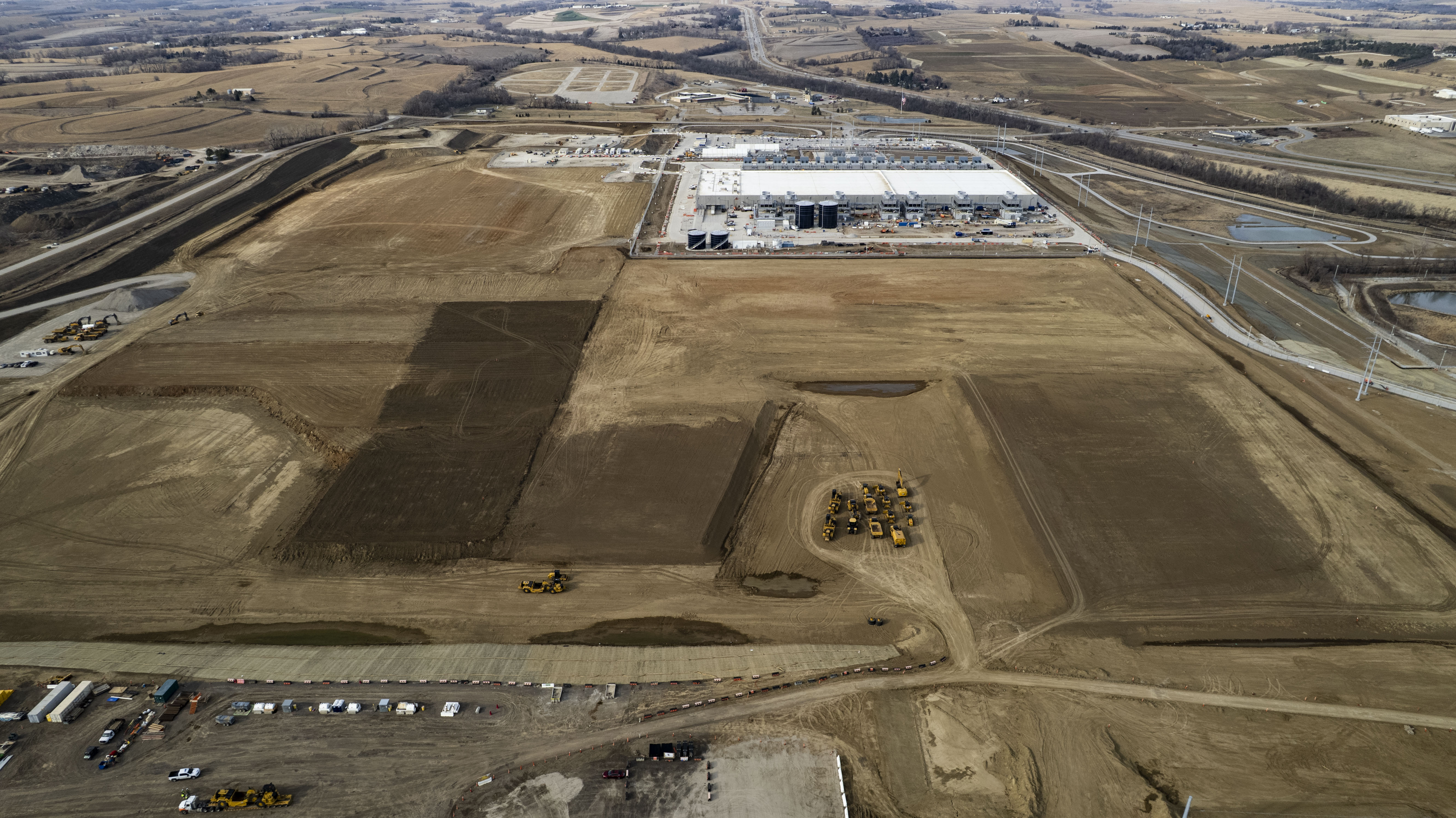
Construction at a Google data center near Blair High Road and State Street in northwest Omaha on March 10. Douglas County records show a Google-tied LLC owns more than 450 acres at the northwest Omaha site. Photo by Naomi Delkamiller/Flatwater Free Press
Tenaska eyes southeast Nebraska land
Rick Wheatley owns a property with about 80 acres in Otoe County that has been in his family for generations. Today, his daughter lives on the property, where corn and soybeans are grown. Sometime last fall, a representative from Tenaska approached Wheatley about optioning the property.
Wheatley said the representative mentioned the company was trying to put together 2,000 acres near a gas pipeline for a power plant that could serve an AI center.
“At first he kind of slipped and said for AI, they need their own generating stations for AI. But then they kind of backpedaled it,” Wheatley said. The representative instead told him that the company planned to have a business park.
“And I thought, ‘What do you mean it’s a business park? Who's going to build out there in the middle of nowhere?’” Wheatley said. In the end, he chose not to deal with the company. However, he wasn’t the only one to get a knock on his door.
Since December, Tenaska has optioned over 2,600 acres of land across southeast Nebraska under two LLC names, according to county deed records. As of March 11, this includes:
At least 1,000 acres in Gage County
At least 450 acres in Lancaster County
At least 860 acres in Cass County
Nearly 300 acres in Otoe County
The agreements allow Tenaska the exclusive right and option to buy the land from the seller by a certain date.
Gage County board member Emily Haxby said that earlier this year, a representative from the company sat down with her and two other board members.
Haxby said the Tenaska representative told the elected officials that they plan to create a natural gas power plant that would serve an industrial park that could house manufacturing and/or a data center in northeast Gage County. Haxby said she understood that the company is potentially looking for about 1,000 to 3,000 acres.
“My biggest concern is making sure, one, that they're talking to the public and that they're working with them, because over in that part of the county, there's a large population boom for us,” Haxby said. “The other thing is, what kind of industry are they going to bring in? And are other natural resources that we have available to us enough?”
On Dec. 30, amid its optioning spree, Tenaska made a $50,000 donation to Pillen’s reelection campaign, according to campaign finance records. That brought its total campaign contributions to $65,000 in 2025 — an increase from the $27,500 Tenaska gave to the governor during his first run for the office in 2022.
Tenaska had not responded to requests for comments about the land deals or its political contributions as of press time.
“This legislation was written in coordination with Nebraska stakeholder organizations such as Public Power and Tenaska to benefit Nebraska ratepayers,” Zoeller, Pillen's policy adviser, said in a statement. “The Governor believes that the largest corporations in the world should be paying for their own generation of their facilities, not your average Nebraska homeowner.”
Carbon capture could be largest in U.S.
Google is implementing various strategies to power its data centers. Most recently, the company announced it has partnered with Xcel Energy and the City of Pine Island, Minnesota, to power a data center in that state with a mix of renewables and a new technology for battery storage developed by Form Energy. In Nebraska, the company is paying for 423 megawatts of wind energy for its data center in Lincoln.
With its potential project in Nebraska, the documents show that Google and Tenaska could double down on a controversial fuel source. Natural gas plants create greenhouse gas emissions that worsen climate change. They also emit nitrogen oxides that can worsen public health and air quality.
Some data centers doing self-generation are investing in natural gas generators that are less efficient than what utilities use, potentially creating more emissions, according to reporting by Grist.
For this project, though, Google and Tenaska could develop a large-scale gas plant that is on par with what some utilities use, which is a big step compared to other data center developers, Gillingham said.
The companies, according to documents detailing the proposal, also plan to further reduce their greenhouse gas emissions through carbon capture, a technology that is uncommon because it has not yet proven to be financially viable.
Google announced its first carbon capture and storage project last October for a 400-megawatt gas plant in Illinois that will support its data centers in the region. The project in Nebraska could be significantly larger.
“Google has very ambitious net-zero targets, and they have the money and they could do it,” Gillingham said. “This would be a huge investment by Google, fundamentally, to see if it can be done at a larger scale and more cost effectively than it's ever been done before.”
Much like the overall proposal, though, it’s unclear if the carbon capture piece will actually materialize. The documents obtained by Flatwater specifically mention Tallgrass as the potential gas supplier and transporter of the captured carbon.
In a statement, Steven Davidson, Tallgrass’ senior vice president of government and public affairs, said the company currently does not have partnerships for a new data center or a Tenaska gas plant in Nebraska.
“While we are not in a partnership with anyone to build a data center in Nebraska, we do take every opportunity to share our belief with anyone who will listen … that Nebraska is an exceptional state for investing and growing in a manner that respects local communities, expands opportunities for families to succeed, and focuses on long-term collaboration to improve people’s lives,” he said.
Davidson expressed support for the governor’s bill, adding that the company is encouraged to see it moving through the Legislature.
If Google and Tenaska do intend to build a data center and gas power plant that is connected to the grid, it will require passage of the governor’s bill, which advanced out of committee last month and will next have to come before the full Legislature, where it could face opposition.
During the hearing last month, critics raised concerns about the potential environmental impacts of data centers and the price of natural gas, which is the primary fuel source for heating homes in the winter.
If gas-powered projects incentivized by the bill do come online, that would likely cause a spike in demand and an increase in natural gas prices, Gillingham said.
State Sen. Danielle Conrad, a Democrat from Lincoln, was one of only two committee members who voted against the bill.
She has filed a flurry of amendments seeking further oversight of the agreements that would allow the privately built power plants to sell power back to the public power districts’ grids.
“I'm concerned,” Conrad said, “that the governor and the majority of the Legislature are once again going to be yielding their power to benefit a private corporation at the expense of the public and take some first steps to eviscerate our unique and effective public power system in Nebraska.”
The Flatwater Free Press is Nebraska’s first independent, nonprofit newsroom focused on investigations and feature stories that matter.