

He lost his South Dakota police certificate 20 years ago. Now, he’s the sheriff of the Nebraska county next door
State law at the time allowed Tim Decker to continue his law enforcement career in Nebraska
 By News Channel Nebraska
A Dakota County Sheriff's Office vehicle seen Wednesday, March 4. In early February, the Dakota County Board appointed then-Chief Deputy Tim Decker as the new sheriff. Decker was previously chief deputy for 15 years under the former sheriff. Photo by Jerry L Mennenga for the Flatwater Free Press
State law at the time allowed Tim Decker to continue his law enforcement career in Nebraska. Now decades later with no additional incidents, supporters say he is the right man for the top job in Dakota County.
By Andrew Wegley
Flatwater Free Press
The off-duty police officer had been drinking heavily at a casino and at a South Dakota bar in September 2005 when a convicted felon who had bad blood with Officer Tim Decker walked in.
Within minutes, the North Sioux City cop approached, and the two men began to argue.
Soon, both were calling more police officers, instructing them to come to the bar.
Before any of them arrived, Decker grabbed hold of the other man, punched him in the face and knocked him to the ground. The man got up and swung back. Both men fell to the ground in the ensuing fight, and Decker broke his ankle.
The events that night, relayed in testimony to a grand jury two months later, earned Decker a misdemeanor assault charge. Seven months later, he pleaded guilty to a lesser charge, disorderly conduct.
A judge ordered Decker to pay a $144 fine and surrender his South Dakota law enforcement certificate.
He could no longer be a South Dakota cop. But he was able to keep the law enforcement certificate that he had previously earned in Nebraska.
Even before the criminal proceedings in South Dakota concluded, Decker resumed his law enforcement career in the Cornhusker State without any hint of ire from the board that oversees law enforcement certification in Nebraska.
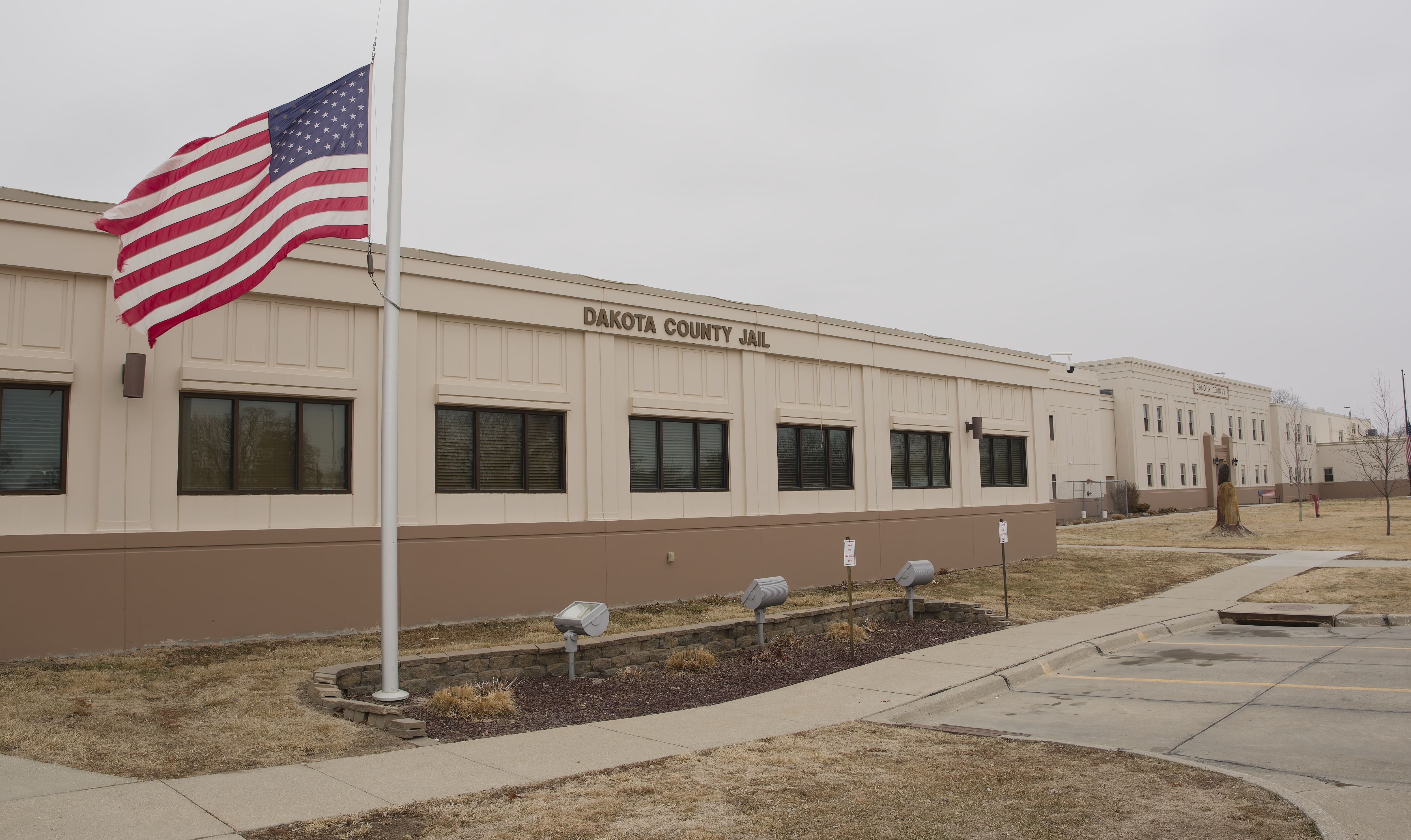
Last month, Decker was appointed sheriff of Dakota County — less than 20 miles south of North Sioux City — where he is seeking a full term this year. He had been the county’s chief deputy sheriff since 2011.
“I’ve been here for 15 years; I would stand on my record for all the good things I’ve done in this county,” Decker said in an interview. “I did make a mistake in South Dakota, and I owned up to it. … I committed disorderly conduct. That’s what disorderly conduct says — I got into a fight with another person in the bar. I shouldn’t have. I thought I was guilty of that.
“Does that prevent you from being a law enforcement officer in either state? No. No, it does not.”
For decades, Nebraska law has required the state’s police regulatory board, called the Police Standards Advisory Council, to revoke an officer’s certification when they are convicted of a felony. It also allows the board to revoke licenses “at any time for good cause” — including incompetence, neglect of duty, or physical, mental or emotional incapacity.
In 2021, Nebraska lawmakers changed the law to require the council to revoke an officer’s certificate in cases of serious misconduct, violations of an officer’s oath or code of ethics, misdemeanor domestic violence convictions or other state or federal misdemeanors with “a rational connection with the officer's fitness or capacity to serve.”
The 2021 law also required out-of-state police officers seeking a certificate in Nebraska to swear under oath that their credentials haven’t been revoked elsewhere, they haven’t been convicted of a felony or some misdemeanor crimes, and they haven’t been fired or disciplined for misconduct.
“If he just got in the bar fight a year ago and then rolled down here and was appointed sheriff, I’d have a lot to say about it,” said Steve Lathrop, a former state senator from Omaha who authored the 2021 law. “But I don’t know how I feel about a guy who’s kept his nose clean for 20 years and his circumstances predated that bill.”
Another bill signed into law in 2018 required police departments and sheriff’s offices across the state to notify Nebraska’s Crime Commission, which houses the police oversight board, when any officer is fired or allowed to resign over all sorts of misconduct.
But when Decker resumed his law enforcement career in Nebraska in 2005, none of the new policies were on the books. And even if they had been, it’s unclear to what extent they would have applied to Decker.
Decker, who said he had worked on and off at the Thurston County Sheriff’s Office since 2001, did not have to seek a new certification. And since his conviction and exit from the North Sioux City Police Department happened north of the state border, they fell outside the purview of Nebraska’s Police Standards Advisory Council.
Prior to 2018, an officer could be terminated for fairly serious policy or code of conduct violations without it being reported to the Crime Commission, said Bryan Tuma, the commission’s executive director.
“You could have an officer that just kind of drifted around in law enforcement, going agency to agency unless the agency looked at their background and said, ‘I don’t think we want to mess with this guy. There’s something back there that’s troubling.’ Theoretically, they could get hired again.”
Decker said the Thurston County Sheriff’s Office knew of his criminal charges when he rejoined the agency after he was fired in South Dakota. The Police Standards Advisory Council didn’t consider revoking his Nebraska law enforcement certificate until 2016. The board voted not to revoke his license.
Tuma said he could not disclose the details of the review, which happened more than a decade after Decker’s conviction in South Dakota. Decker said the review was in response to a complaint filed against him, which he called “political.”
He left Thurston County in 2007 when his wife took a job in Alaska, according to the application he submitted in January to be Dakota County’s sheriff, and returned in 2009.
He worked in Thurston County for another two years before his supervisor, Chris Kleinberg, was elected sheriff in Dakota County in November 2010. Decker joined Kleinberg as his chief deputy in January 2011, according to his application, which also discloses his criminal conviction and five other low-level offenses, including a separate disorderly conduct conviction in South Dakota in 1996.
Kleinberg did not respond to multiple emails seeking comment.
Martin Hohenstein, the chair of the Dakota County Board, said the county’s commissioners knew of Decker’s surrendered law enforcement certificate in South Dakota when they tabbed him to be their sheriff last month. It did not give the board pause, he said.
Decker was Kleinberg’s pick to succeed him, Hohenstein said, and his own top choice as well.
“You live a long life and a lot of things happen,” he said. “But I think the board was definitely comfortable in hiring him.”
The Flatwater Free Press is Nebraska’s first independent, nonprofit newsroom focused on investigations and feature stories that matter.