

2026 smoke advisory system begins in Nebraska ahead of fire season
Health officials warn smoke from regional fires could affect air quality across the state
Press release
LINCOLN, Neb. — Nebraska’s public smoke advisory system is now active for 2026, state health officials announced.
The Nebraska Department of Health and Human Services said advisories will be issued when smoke from prescribed burns or wildfires is likely to significantly affect air quality in parts of the state.
The system, first implemented in 2018, operates in partnership with the Nebraska Department of Water, Energy, and Environment, local health departments and the National Weather Service.
Officials say prescribed burning season is underway in Nebraska and neighboring states, including Kansas and Oklahoma. Smoke from wildfires in western states and Canada has also affected Nebraska in recent years.
Air quality impacts vary depending on the size, type and location of fires. Smoke from prescribed burns may last only a few hours, while wildfire smoke can linger for consecutive days. Weather conditions also affect the magnitude and duration of smoke impacts.
If state and local agencies determine smoke is likely to significantly affect air quality, DHHS and DWEE will issue a joint advisory to inform the public. Advisories will be based on regional data, smoke plume modeling and readings from air quality monitors located in Omaha, Blair, Bellevue, Lincoln, Beatrice, Grand Island and Scottsbluff.
In addition to statewide advisories, the Lincoln-Lancaster County Health Department and the Douglas County Health Department may issue air quality information for their jurisdictions.
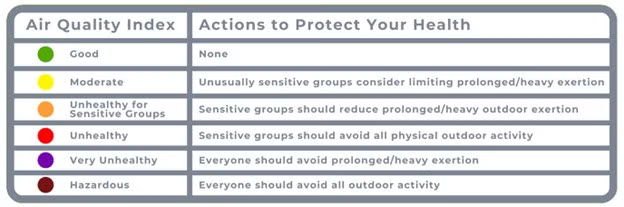
Health risks and safety tips
Smoke exposure can cause burning eyes, runny nose, coughing and illnesses such as bronchitis. Children, older adults and people with asthma, COPD or heart or lung disease may experience more severe symptoms.
Health officials recommend:
Keeping doors and windows closed
Running air conditioners with high-efficiency particulate air, or HEPA, filters
Drinking plenty of water
Limiting or avoiding strenuous outdoor activity
Staying indoors if you have respiratory or heart-related conditions
Anyone experiencing chest pain, chest tightness, shortness of breath or severe fatigue should contact a doctor.
Residents can monitor current air quality conditions through AirNow, which uses the Air Quality Index, or AQI, to report air conditions nationwide using a color-coded system.